Why You Should Plan Your Pool Construction and Landscaping Together
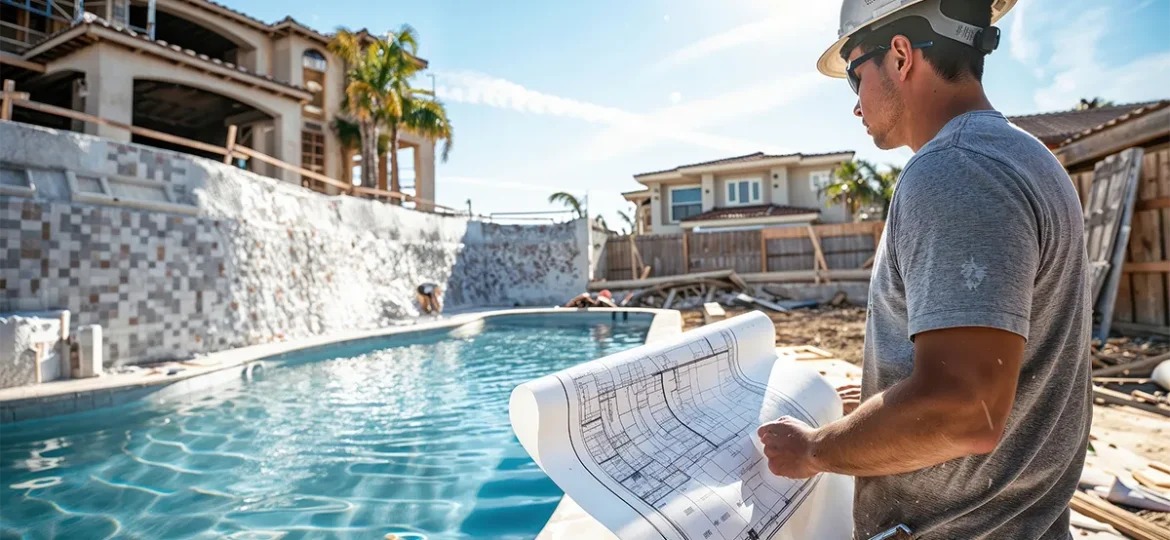
The pool gets handed over. The water is in, the tiles are clean, and the garden around it is still bare ground. Pool landscaping starts months later, often with a different company, and by then the deck levels, the drainage falls and the equipment position are all fixed.
That gap is where the cost hides. In Dubai, landscaping decisions change how the pool actually runs. How often the filter needs cleaning. How hard the heat and cool unit works. Where the water goes after a backwash, and whether anything is quietly damaging the pipework underground. Those are engineering outcomes, decided by planting plans and paving levels.
Here is what to plan together, and why leaving it until after handover costs more than it saves.
What Pool Landscaping Actually Covers
Everything around the water that is not the pool shell: paving and coping, planting beds, trees, shade structures, boundary screening, lighting, drainage falls, irrigation, and the enclosure around the plant room.
Each of those touches the pool. Treating them as decoration applied afterwards is how villa owners end up with a beautiful garden that makes the pool more expensive to own.
Planting Decides How Often You Clean the Filter
Planting is usually chosen on looks alone, and it carries the longest consequences of any pool landscaping decision. What sits in the beds around a Dubai villa pool sets the filter's debris load for years, and sometimes decides what happens to the pipework underneath. Two things to get right: what the plants drop, and where the roots go.
Debris load. Every leaf, flower and seed that lands in the water ends up in the skimmer basket, then the filter. A row of heavy-shedding trees on the prevailing wind side of a pool will add work to every single maintenance visit, permanently.
Choosing low-shed, climate-suited species and putting the heaviest planting downwind of the water is a five-minute decision at design stage. It saves hours every month for the life of the pool. It also protects the filter: one working constantly against organic load runs at higher pressure and needs backwashing more often, which costs water.
Roots. The slower problem. Tree and large shrub roots seek moisture, and a pool is the wettest thing in the garden. Over years, roots can lift paving, disturb coping and reach buried pipework and conduit.
Minimum planting distances from the shell and from service runs belong on the drawing, not in someone's memory. Root barriers are cheap during construction and disruptive to retrofit. Where mature planting already sits close to the pool and the water level keeps dropping, leak detection will tell you whether the roots are the cause before anyone starts lifting paving.
Keep the Plant Room Breathing
This is the one we see most often, and it is almost always a landscaping decision.
An air-source heat and cool unit works by moving large volumes of air across a coil. It needs clear space around both the intake and the discharge.
Screen it tightly with a hedge. Box it into a solid decorative enclosure. Tuck it into a corner where its own discharge air loops back into the intake. Each of those makes the unit work harder, run longer and cost more to run, and summer is exactly when you least want it struggling.
creening the plant room is reasonable, and clients almost always want it. It just has to respect the manufacturer's clearances, use louvres rather than solid panels, and leave a technician room to open the pump room equipment and service it. Plan it at landscape stage and you get both: hidden equipment and full performance.
Drainage, Irrigation and Backwash
Three water flows to resolve, and none of them appear in a pool construction contract.
Deck falls should carry water away from the pool, not into it. Get this wrong and every deck wash sends dust, sand and detergent straight into the water, which shows up as chemistry problems.
Irrigation overspray landing in the pool introduces untreated water and nutrients continuously. It is a common cause of persistent algae in gardens where everything else looks correct. Head placement and spray arcs need setting with the pool in mind.
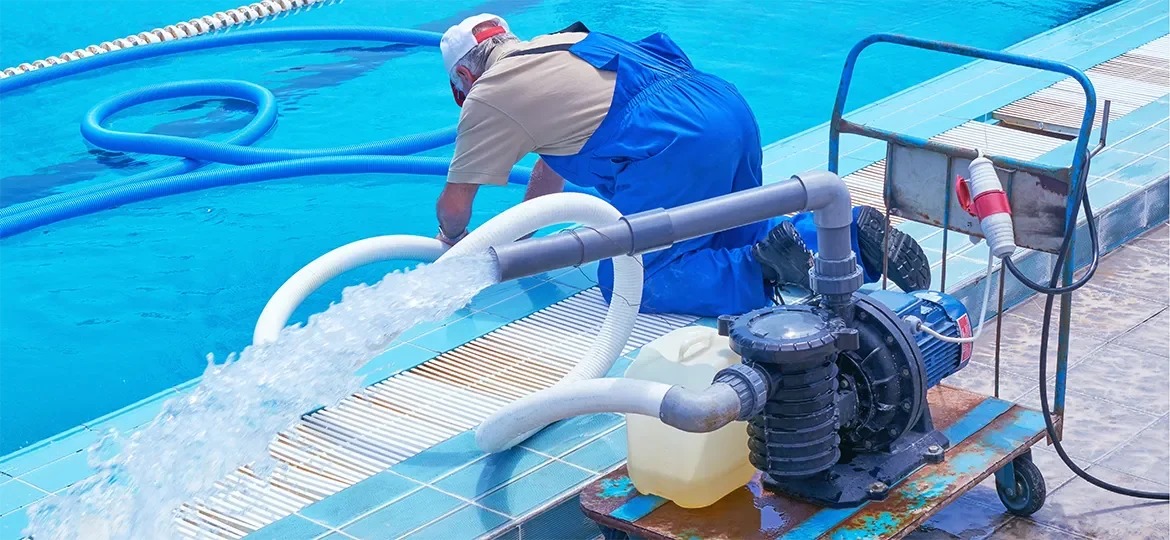
Backwash discharge has to go somewhere legitimate, and that route needs deciding on the drawing. Left unresolved, it defaults to whichever planting bed sits nearest the plant room, which is bad for the planting and worse for the paving above it.
Shade Changes Your Cooling Bill
A pool with a long unshaded western exposure absorbs heat all afternoon. Shade structures, pergolas and mature trees positioned to catch that exposure reduce the load the cooling equipment has to remove, every summer day, for the life of the pool.
Deck surface matters too. Dark natural stone around a Dubai pool becomes too hot to walk on barefoot by midday. Slip resistance when wet is a separate specification from the material, worth confirming rather than assuming.
Lighting and Services Go In Before Paving
Conduit for garden lighting, feature lighting and any future outdoor kitchen or pergola power needs to be laid before the deck is finished. Retrofitting means lifting paving that was laid perfectly well the first time.
Around water, fittings and their ingress protection ratings need to suit their position, and that is a decision made with the electrical design rather than picked from a catalogue at the end.
Why This Should Run as One Project, Not Two
The argument for planning both together is not aesthetic, it is practical. Design the landscaping alongside the pool and the drainage, conduit, root barriers, plant room ventilation and irrigation all get built into the same excavation and the same paving pour. Add any of it later and it stops being a landscaping job and becomes a small demolition: paving lifted, beds dug out, slabs broken up to fix something that should have been decided before any of it went down. It's also where the cost sits, before anything even needs correcting. One excavation and one paving pour is cheaper than two, and a site that mobilises once for both trades avoids paying for access and disruption twice over.
That is also why a single contractor handling both is usually the better arrangement. A landscaper never told the plant room needs airflow will box it in with whatever looks best. A pool contractor gone before landscaping is even discussed has no reason to think about where an irrigation line will end up. Fewer handoffs means fewer decisions made by someone who didn't know what the other trade had already fixed in place.
Why Villa Owners in Dubai Choose Poolsmith
Landscaping around a pool is not the same job as landscaping a garden. The difference is knowing which decisions affect the water.
We design the garden around the engineering. Planting distances, plant room clearances, deck falls and irrigation arcs are set with the pool's filtration and cooling in mind, because those are our core business rather than an adjacent one.
One point of contact, start to finish. Construction, landscaping and commissioning run through one team, so you are not coordinating between a pool contractor and a landscaper who each assumed the other was handling drainage.
We stay after handover. Our Annual Maintenance Contracts mean the pool continues to be looked after by people who understand how it was built, not a new team starting from zero.
Frequently Asked Questions
The questions villa owners ask us most often about pool landscaping in Dubai, and short answers to each
Together, ideally. Drainage falls, lighting conduit, root barriers and plant room ventilation are all far cheaper to build in during construction than to retrofit through finished paving.
Yes, in two ways. Shade positioned to block afternoon sun reduces the load on the heat and cool unit, and low-shed planting reduces filter loading, which means less frequent backwashing and less water replaced.
Yes, and it is one of the more common jobs we take on. It is worth combining with any equipment upgrade or pool renovation so the deck is lifted once rather than twice.
It can, over time, if species and distances are chosen without reference to the pool. Roots seek moisture and will reach paving, coping and buried pipework. Sensible spacing and root barriers prevent it.